
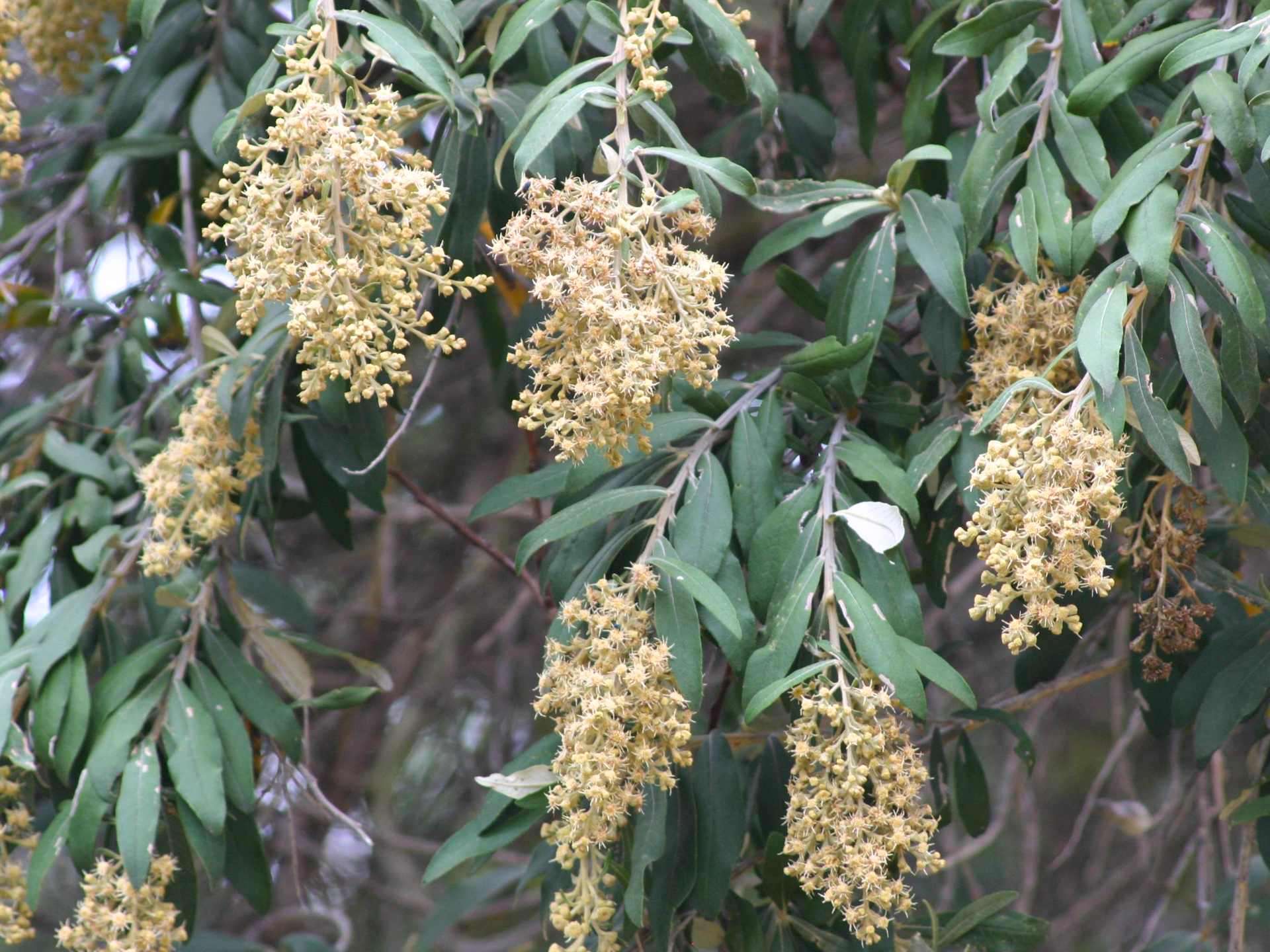
I first met leleshwa through a small bottle of essential oil brought to me by a good friend from Kenya. He knew I loved locally sourced aromatic materials, especially those that carry the scent of a particular place. At the time, I knew almost nothing about the plant. But the aroma stayed with me: dry, herbal, camphoraceous, airy, and strangely alive. It did not smell like just another essential oil. It smelled like landscape, movement, smoke, medicine, and open air.
Since then, leleshwa has completely captured my attention. What began as an unexpected gift became an invitation into East African ethnobotany, pastoral traditions, ecology, chemistry, and scent. Discovering it changed the way I think about aromatic plants, especially those that are still underrepresented in European aromatherapy literature.
This article is my attempt to follow that first encounter back to the living shrub: to the landscapes where it grows, the communities that know it, and the chemistry behind its unforgettable scent.
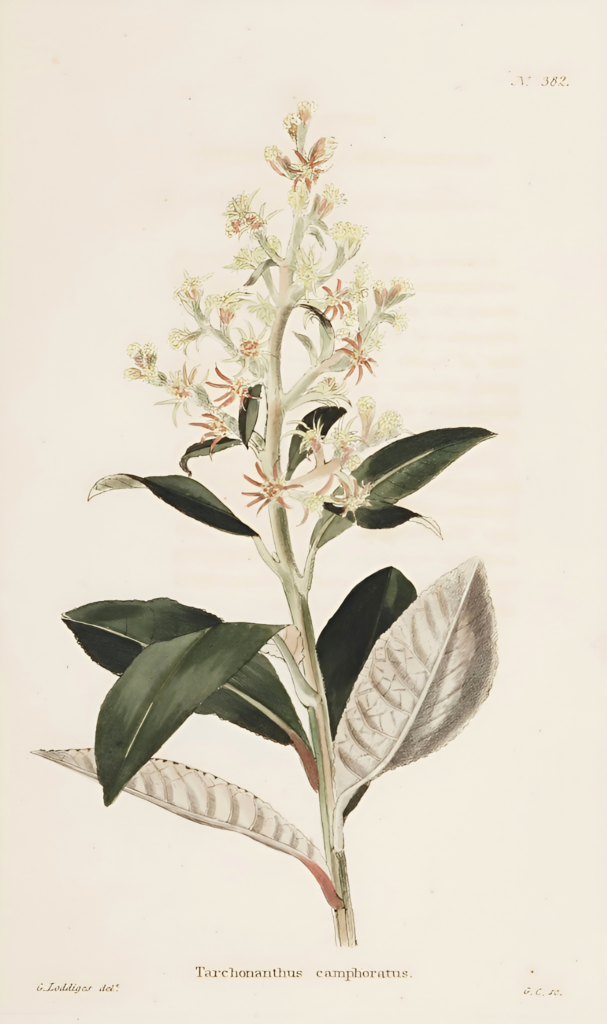
Leleshwa – The plant
Leleshwa does not announce itself dramatically – in the middle distance of the savanna, it can look like an ordinary gray-green shrub, easy to overlook if you are not already searching for it. But crush a leaf between your fingers and the impression changes immediately. A sharp, resinous, camphoraceous scent rises from the plant, familiar and unfamiliar at once, somewhere between a medicine cabinet, dry herbs, smoke, and an old forest.
Tarchonanthus camphoratus has grown across East and southern Africa for so long that many languages have named it. The Maasai named it, the Kikuyu named it, and other communities named it too. Each name points, in its own way, to the same aromatic shrub and to the relationships people have built with it.
Names, languages, and local identity
The plant travels under many names. In Maa, the Maasai language, it is known as ol’leleshwa or oleleshua. Samburu, a closely related language, uses a near-identical form. Kikuyu speakers call it mururicua, although I have not been able to trace the etymology of that name in the available sources. Swahili-speaking communities know it as mkalambati (Orwa et al., 2009). In Kipsigis and Tugen, the name is lelechuet, while Tugen also records elewa. Further south, Zulu speakers use umqhabhulo, and Afrikaans speakers settled on kanferbos, meaning camphor bush, or vaalbos, meaning gray bush, after the plant’s muted color (von Staden, 2018; Dharani & Yenesew, 2022).
The scientific name has its own story. Tarchonanthus comes from the Greek τάρχος (tárkhos), meaning funeral rites, embalming, or preservation of a corpse, and ἄνθος (ánthos), meaning flower or blossom. Literally, it is the funeral flower. Why Linnaeus chose that etymology in 1753 is not completely clear. Jackson (1990) suggests that the camphoraceous smell may have evoked associations with preservation or ritual. The species epithet, camphoratus, is more direct: it describes the camphor-like scent released when the leaves are crushed.
Botanical portrait of leleshwa
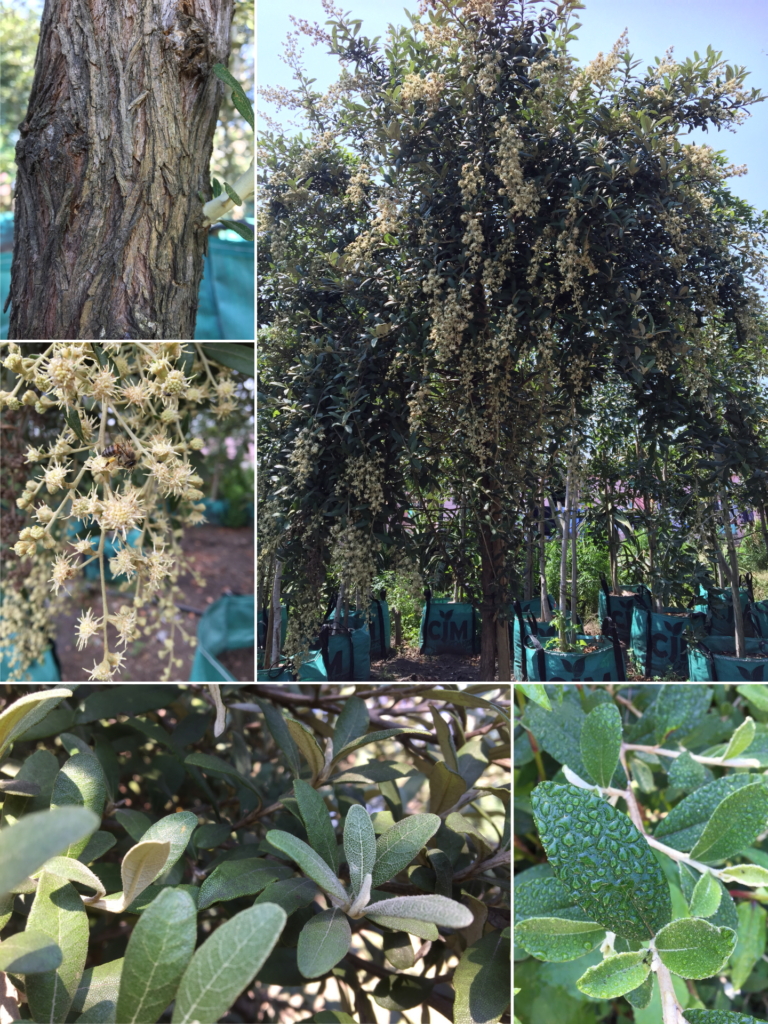
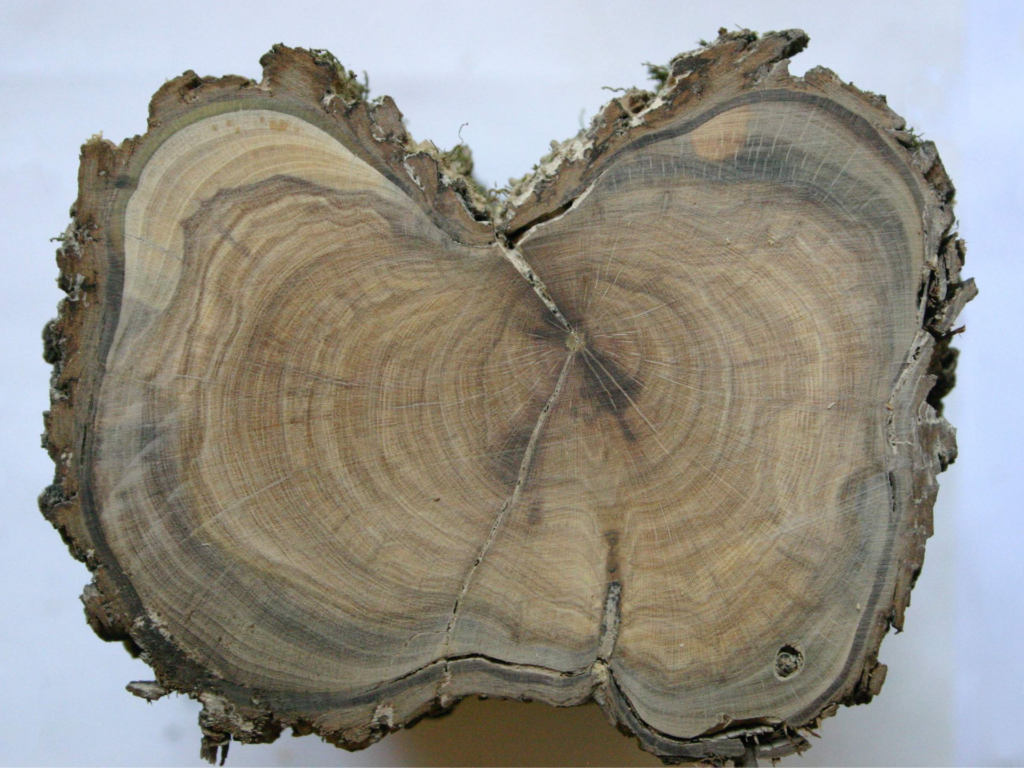
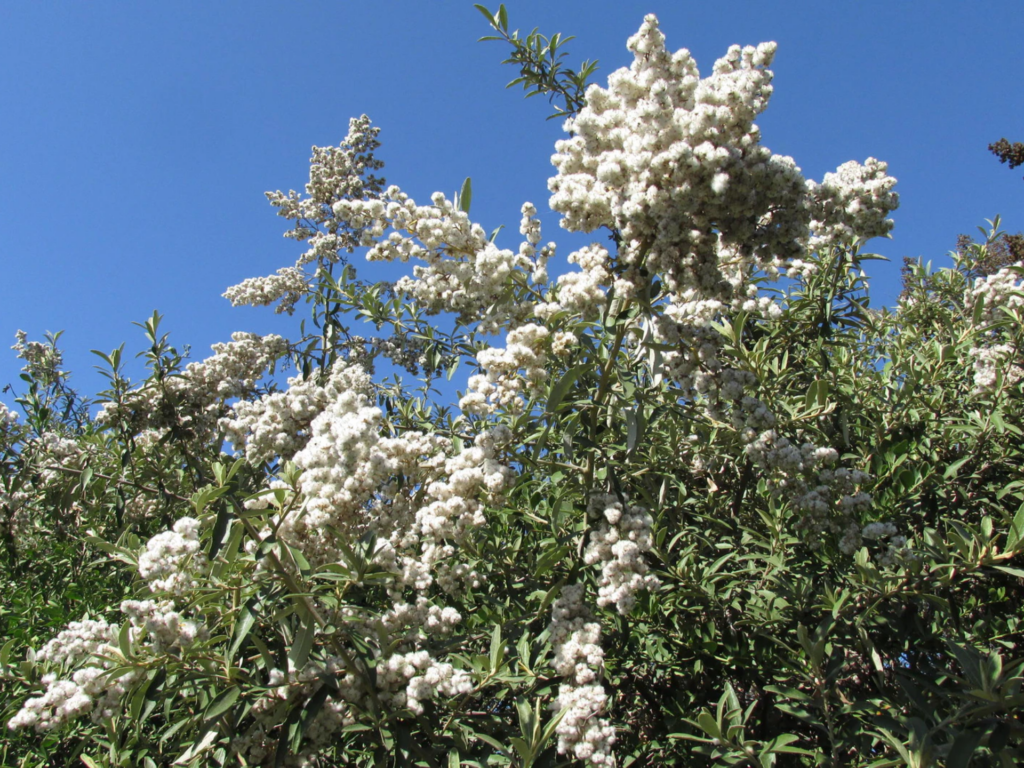
Tarchonanthus camphoratus is a dioecious evergreen shrub or small tree, usually reaching about five to six meters, though it may occasionally grow to eight. The bark is rough, gray, and fissured with age. The leaves are narrowly elliptic, green on the upper surface, and silvery-white underneath because of a dense layer of fine hairs. Their base is rounded, the tip is pointed, and the margins may be entire or finely toothed (Dharani & Yenesew, 2022). When crushed, the leaves are strongly camphor-scented.
The flowers are small, unisexual, creamy white, and bell-shaped, appearing in heads clustered into leafy terminal panicles. The fruits are small, and the tiny seeds are surrounded by dense, fluffy, cotton-like white hairs. Even the fruits are aromatic.
Taxonomically, leleshwa belongs to the order Asterales, family Asteraceae, and genus Tarchonanthus, a group of aromatic African shrubs closely related to Brachylaena. Historical synonyms include Tarchonanthus abyssinicus, T. angustissimus, T. litakunensis, T. minor, T. obovatus, and T. procerus, most of which are now treated within the T. camphoratus complex (Royal Botanic Gardens, Kew, n.d.).
Where leleshwa grows
Leleshwa has a wide and ecologically coherent range. It occurs from the Horn of Africa, including Ethiopia, Somalia, and Eritrea, south through Kenya, Uganda, and Tanzania, and further into Namibia, Botswana, Zimbabwe, and the northern interior of South Africa. Angola and parts of the Arabian Peninsula, including Saudi Arabia and Yemen, extend the range even further (Orwa et al., 2009; von Staden, 2018; Royal Botanic Gardens, Kew, n.d.).
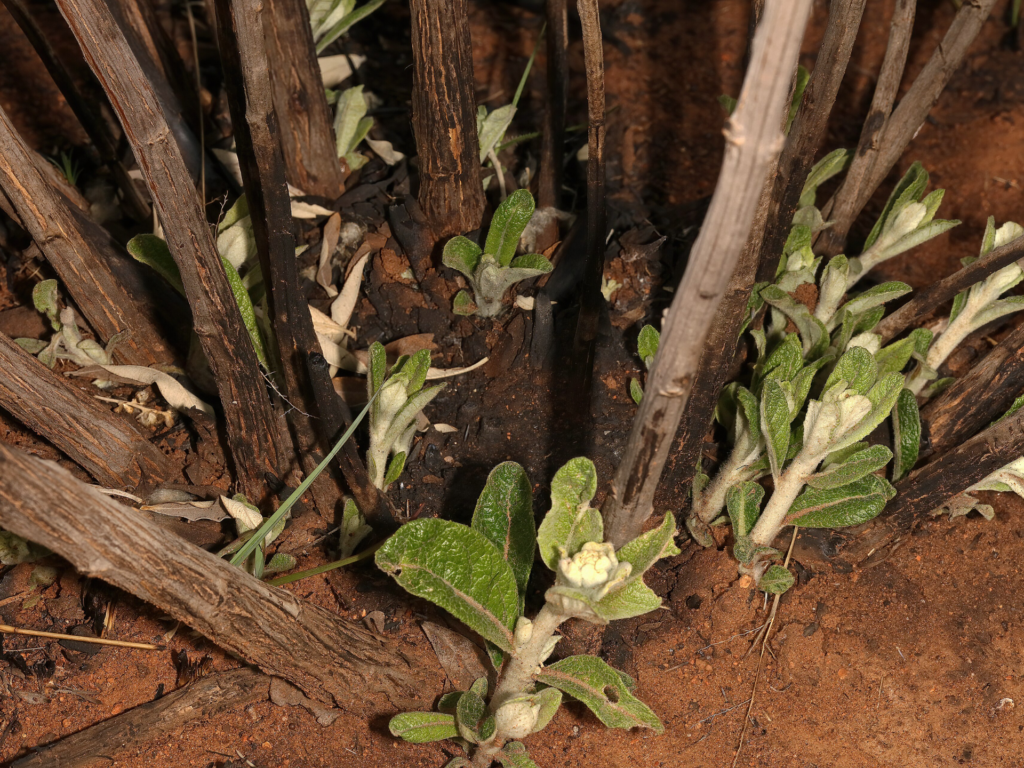
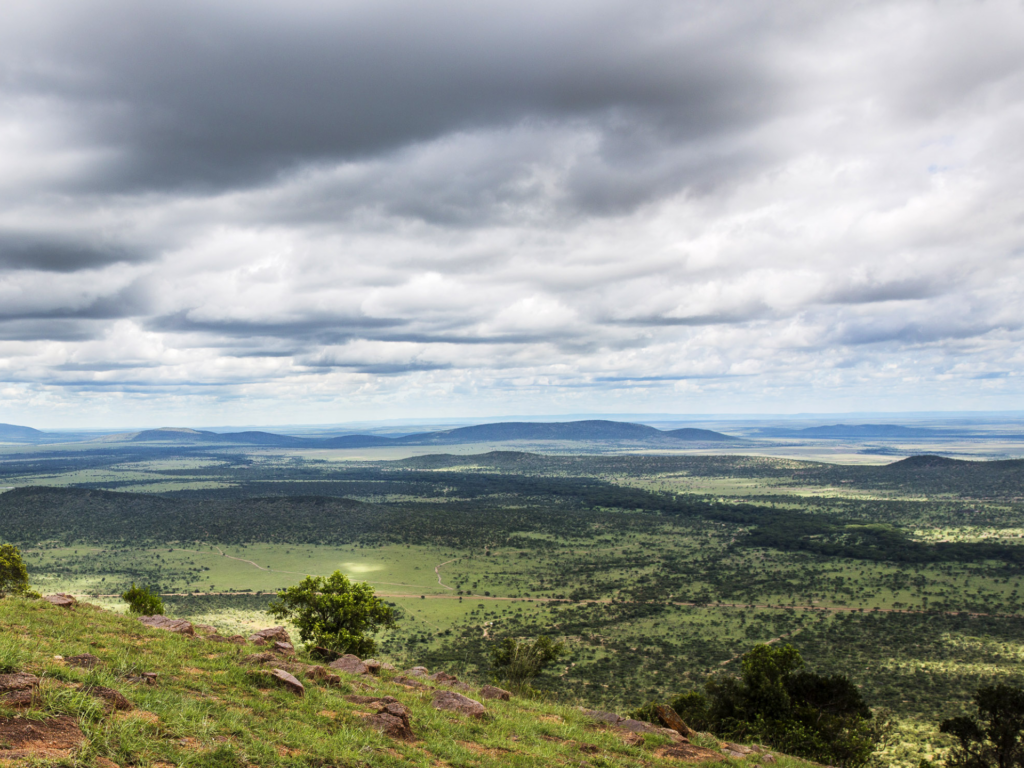
Within this range, it favors dry savanna and open woodland: rocky slopes, stony soils, flat grassland, and areas often associated with acacias. In East Africa, it grows between roughly 1,000 and 3,000 meters above sea level; it tolerates drought, and it is surprisingly resistant to fire. Field records show little mortality even after three consecutive burns, and the plant coppices vigorously from its rootstock when cut (Orwa et al., 2009).
That combination of fire resistance, drought tolerance, and vigorous regrowth helps explain both its ecological usefulness and its tendency to dominate disturbed landscapes.
Native plant or bush encroacher?
Here, the picture becomes more interesting: Tarchonanthus camphoratus is native to eastern and southern Africa, but in disturbed or overgrazed landscapes, it does not always behave politely. It can spread vigorously, form dense thickets, and outcompete other vegetation. Early agronomic workers in the Kenya-Tanzania region listed it as a principal grassland weed (Holm et al., 1979). In South Africa, Wells et al. (1986) included it among declared “problem plants” and described it as an “invader” of stream banks and disturbed ground, capable of forming dense, competitive thickets.
This does not make leleshwa an alien invader in the usual sense. A plant can be entirely native and still become ecologically dominant when human activity changes the balance of a landscape. Overgrazing, land clearance, altered fire patterns, and disturbance can all remove the pressures that once kept a species in check. Leleshwa is a resilient opportunist within its own territory, and in already stressed landscapes that resilience can tip into encroachment.
Sustainability and sourcing
From a conservation perspective, leleshwa is not currently a fragile plant. As of 2018, the IUCN lists T. camphoratus as Least Concern: widespread, common, and in some contexts actively overabundant (IUCN, 2019). The sustainability question is therefore not mainly about scarcity. It is about land use, harvest context, and traceability.
The same shrub that some farmers and range managers see as a problem species also has clear ecological value. Orwa et al. (2009) document its use in:
- erosion control,
- dune fixation,
- windbreak planting,
- firebreak establishment,
- dryland reclamation,
- and long-term soil improvement through slow-decomposing leaf litter.
Leleshwa also matters in local material culture. Its wood is used for fuel and charcoal, and the plant has been recorded in traditional building, horticulture, and tribal papermaking (Kennedy, 1998; Young & Francombe, 1991). In South Africa, it is also cultivated as an ornamental, especially in bonsai, where its vigorous root system becomes an asset rather than a problem.
For essential oil sourcing, the most important question is therefore not simply whether the plant can sustain harvest. It probably can, when harvested responsibly. The deeper questions are whether the supply chain is traceable, whether the harvest is ecologically sensible in that specific place, and whether local communities with established relationships to the plant are included fairly.
Leleshwa – The story
Before moving into the historical and ethnobotanical material, it is important to name the limits of the written record. Leleshwa does not appear often in accessible botanical, ethnographic, or historical literature, and tracing its older uses is not easy. I have not yet found documented legends or myths connected specifically with leleshwa, but that absence should not be mistaken for proof that such traditions do not exist. It reflects the limits of the records available to me, not the limits of the plant’s cultural life.
The sources that do exist also need careful reading. Many older references to leleshwa and other African medicinal plants were written from colonial perspectives. They often focused on how plants might be classified, extracted, used by settlers, or monetised in Europe. Some also use derogatory terminology for Indigenous peoples, including Pappe (1857) and Watt & Breyer-Brandwijk (1962). I refer to these works only where they preserve historically relevant information, and without repeating their language uncritically.
For this reason, this section should be read as a beginning rather than a complete history. It gathers what I was able to trace, while leaving space for future work grounded in local voices, oral histories, and the communities who know leleshwa directly.
Leleshwa in history and tradition
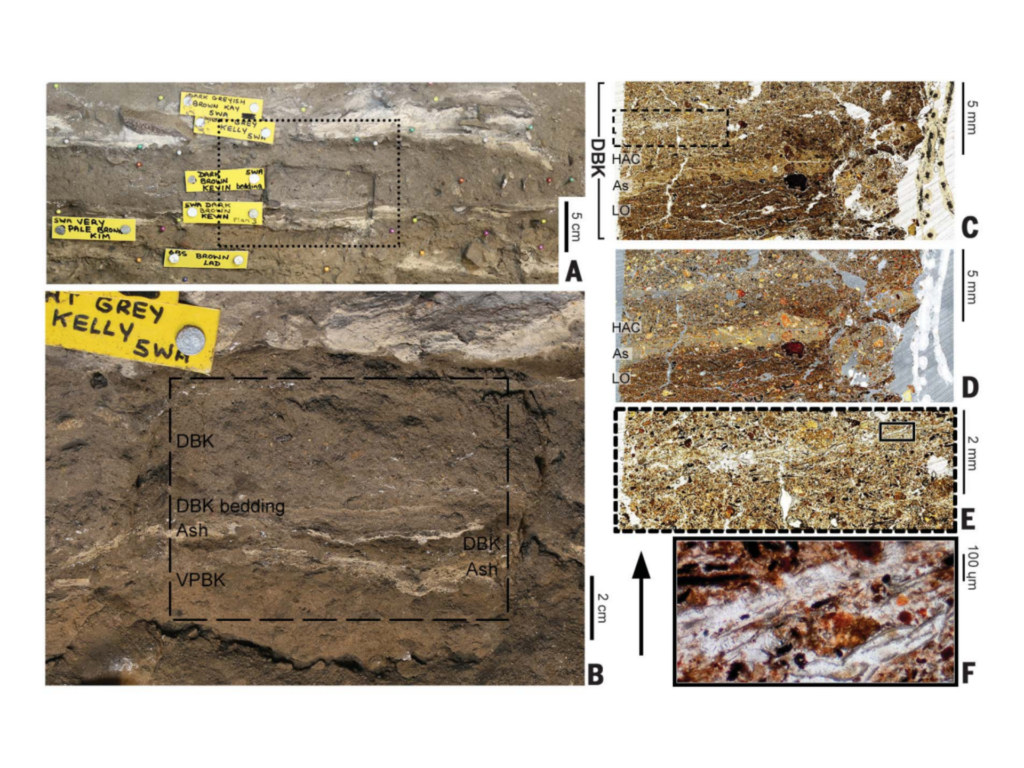
One of the oldest relevant clues comes from Border Cave in South Africa, where Wadley et al. (2020) identified charcoal of Tarchonanthus trilobus, the broad-leaved camphor-bush, in deliberately constructed grass bedding dated to around 200,000 years ago. This is not leleshwa itself, but it is a closely related species with a similar aromatic, camphoraceous character. The find suggests that aromatic camphor-bush species were already part of human sleeping spaces in deep prehistory, possibly for scent, insect-repellent properties, or both. The practical and the aromatic were probably not separate categories.
A very different kind of record places leleshwa within political exchange in sixteenth-century West-Central Africa. Kananoja (2021) documents that a wood known as kikongo, identified as T. camphoratus, was among the medicinal materials offered by African rulers as diplomatic gifts to Europeans. In 1565, forty pieces were sent by the ruler of Ndongo to King Sebastião of Portugal, and more pieces were prepared as gifts when Paulo Dias de Novais entered Angola in 1575. Father Francisco de Gouveia, writing in the same period, described the tree as highly valued in Angola. In this context, leleshwa was not merely a local remedy. It was medicinal wood with political and economic significance.
Nineteenth- and twentieth-century sources preserve a more domestic medicinal thread. Pappe (1857) recorded that Khoikhoi and San people of South Africa dried the leaves and smoked them in place of tobacco, noting a mild narcotic effect; Watt & Breyer-Brandwijk (1962) later repeated a similar observation. Rovesti (2007), following earlier European literature, also notes that Pappe described the plant’s diaphoretic properties and camphor-like scent, while Canzoneri & Spica, writing in 1882, described a decoction of the leaves used as a febrifuge.
Rovesti’s own observations add a more immediate texture – during a stay in Kenya in 1991, he observed branches of leleshwa being burned in evening village fires, releasing a strong balsamic-camphoraceous smoke that local people said helped drive away mosquitoes. He also records a Maasai account in which leleshwa twigs were placed under the armpits before seasonal livestock movements, apparently to ease fatigue or reduce swelling during long walks. The source does not explain whether this should be understood as topical anti-inflammatory use, protective aromatic practice, deodorising custom, or simply the practical knowledge of people used to traveling long distances with animals.
Leleshwa in East African pastoral landscapes
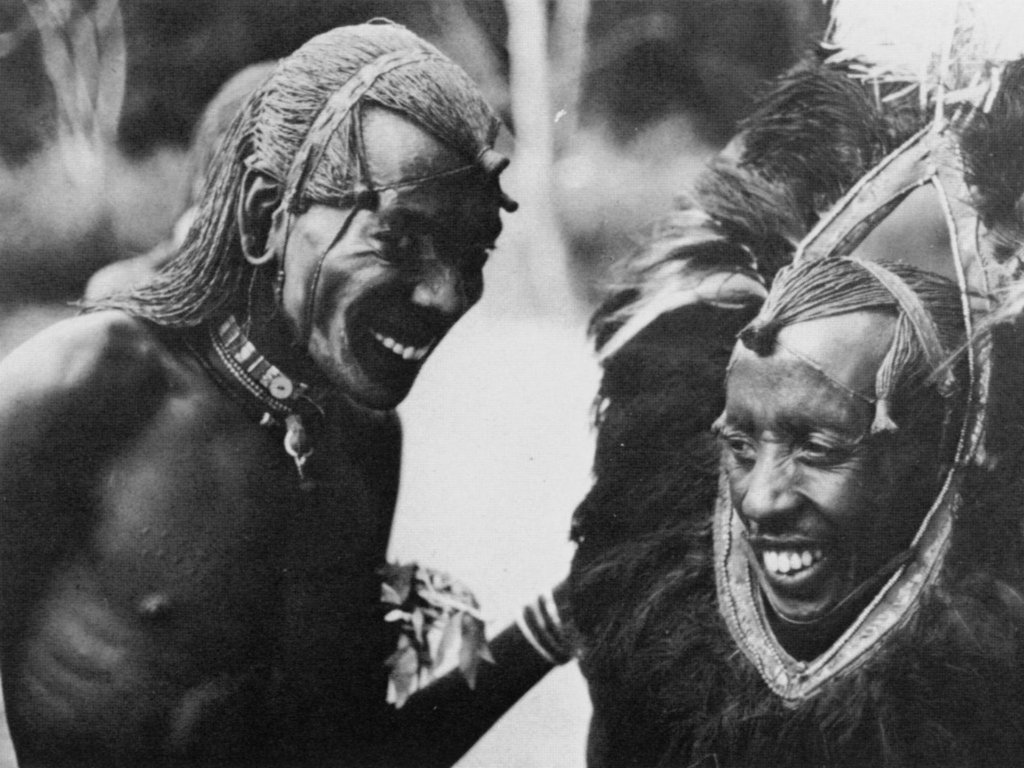
Among pastoral communities of East Africa, and especially in the Maasai material available so far, leleshwa appears less as an isolated medicinal herb and more as part of a lived landscape. It belongs to homesteads, animal enclosures, fires, fences, bodies, and daily movement. The most detailed documentation comes from the Loita Maasai of Kenya, recorded in the UNESCO ethnobotanical survey by Maundu et al. (2001), and from fieldwork in the Sekenani Valley by Bussmann et al. (2006). Together, these sources show a plant used at many scales, from the structure of a home to the scent of the body.
The Maasai name oleleshua appears throughout this literature as a marker of a plant valued both structurally and aromatically. That matters. In these records, durability and scent are not treated as separate qualities. The wood is chosen because it is useful and because it smells right. It can become part of a fence, wall, cooking fire, bed, or bodily practice, and in each case, its usefulness is inseparable from the aromatic presence.
Traditional medicinal uses
The best-documented therapeutic territory of leleshwa is the respiratory system. Leaves boiled in water or milk tea are used as a decoction for coughs, asthma, bronchitis, and chest complaints (Wetungu, Matasyoh, & Kinyanjui, 2014; Dharani & Yenesew, 2022). Smoke and vapor are also important. Inhaling the smoke of burning green leaves, or the vapor from a hot infusion, is recorded for blocked sinuses, congestion, and headache. Among Maasai communities in the Sekenani Valley, patients were reported to sit in the smoke of aromatic plants, including leleshwa, as a deliberate therapeutic practice. The same source records a proverb suggesting that leleshwa smoke was understood to clear the sinuses and strengthen the body (Bussmann et al., 2006).
Beyond the respiratory system, documented uses are diverse. Dharani & Yenesew (2022) record fresh leaf juice applied directly to cuts, wounds, bruises, and fungal infections. They also describe a cold infusion made by steeping 5 g of crushed fresh leaves in half a liter of water for fifteen minutes. This preparation is taken after meals for abdominal pain, or warmed and used as a gargle for a toothache. Fresh leaves may also be chewed for stomach complaints, while a hot poultice of dry powdered leaves and twigs may be applied to the chest under a blanket for asthma and bronchitis.
Other sources extend this picture. Orwa et al. (2009) mention leaf tea for heartburn and over-anxiety, as well as uses for chilblains, tired legs, and sore feet. That last cluster is especially interesting because it echoes Rovesti’s (2007) account of Maasai herders placing leleshwa twigs under the armpits before long seasonal walks.
The record is much thinner for non-Maasai Kenyan communities. Gachathi (1989) records the Kikuyu name mururicua, and some sources suggest possible use for chest complaints or fumigation, but I have not yet found detailed studies. This gap is worth naming rather than filling with speculation.
Veterinary and livestock uses
Leleshwa occupies an interesting position in pastoral landscapes because it is associated not only with people, but also with the animals that share the same environment. Orwa et al. (2009) note that its shoots and leaves are browsed by cattle, while milled mature branches mixed with brandy bush (Grewia flava) have shown promise as a cattle-fattening feed supplement.
The plant is also associated with insect deterrence. Rovesti (2007) notes that leleshwa was known locally for its insect-repellent properties, while Omolo et al. (2004) report observations of wild animals rubbing themselves against the leaves, apparently to rid themselves of mosquitoes and flies. The same authors also mention that the plant may help deter tsetse flies, insects associated with the transmission of trypanosomiasis.
Although direct veterinary studies remain limited, these observations suggest that leleshwa may have played a practical role in animal management beyond its value as forage, particularly in environments where biting insects affect livestock health and comfort.
Everyday uses and material culture
In Loita Maasai communities, oleleshua is listed as the second most important firewood species after olive branches (Olea europaea) (Maundu et al., 2001). It is not chosen for fuel value alone; Bussmann et al. (2006) note that firewood species may be selected for smell as well as hardness, and leleshwa wood burns with a balsamic-camphoraceous smoke that scents the home. Cooking over leleshwa fire and living in a space touched by its smoke are not incidental effects, but a part of the plant’s value.
In construction, leleshwa fills a specific structural niche. Maundu et al. (2001) record that among the preferred species for filling the gaps between the main load-bearing poles of a house, leleshwa ranks first. Its stems are straight, durable, and aromatic within the wall structure. The wood is also termite resistant (Orwa et al., 2009), which is a meaningful quality in the East African savanna.
Fencing is perhaps where leleshwa’s material importance is most visible, and also where pressure on the plant becomes most obvious. The traditional Maasai method of enclosing a homestead or animal boma involves alternating thorny acacia branches with leleshwa to produce an impassable barrier known as a lekhuta (Maundu et al., 2001). Where thorny material is scarce, oleleshua and natal rhus (Searsia natalensis, syn. Rhus natalensis) may be staked into the ground to form a living fence. Maundu et al. (2001) note that the large and continuous demand for fencing material, combined with the need for regular repair, already creates significant pressure on wild T. camphoratus populations in the Loita region of Kenya.
The straight, narrow stems are also used for arrow shafts, and Maundu et al. (2001) list leleshwa first among preferred species for this purpose. Orwa et al. (2009) extend the material picture further, mentioning bows, fishing rods, and rootstock carved into rungu, the traditional wooden throwing club or baton.
At the most immediate bodily scale, Maasai women carried fresh leaves to scent themselves and their huts (Bussmann et al., 2006). Leaves were tucked into the armpits as a deodorant, a practice recorded across several communities (Orwa et al., 2009), and they were also used like a towel to wipe sweat (Maundu et al., 2001).
The leaf as fragrance, the leaf as cloth, the leaf as medicine: in daily pastoral life, these categories dissolve.
Ritual, symbolic, and protective uses
The written evidence for ritual or symbolic uses of leleshwa is much thinner than the evidence for its medicinal, domestic, and material uses. Aromatic plants are important in many Maasai and Samburu ceremonial contexts, but the sources available to me do not consistently list Tarchonanthus camphoratus explicitly.
For that reason, I would not present leleshwa as a major ritual plant unless stronger sources are found. There are hints of protective meaning, but most of them are practical rather than clearly ceremonial: smoke used to repel mosquitoes, bedding used to discourage bed bugs, leaves carried for scent, and branches placed around homes and enclosures.
Even so, practical protection can still carry symbolic weight. A fence, a fire, a scented body, and an insect-repellent bedding plant all participate in the same basic gesture: making a place more habitable.
Leleshwa – the oil
After following leleshwa through language, landscape, history, smoke, medicine, and daily life, we finally arrive at the material many aromatherapists will meet first: the essential oil.
When I received my first bottle, I knew nothing about it. The scent came before the knowledge. Only afterwards did the questions begin. What is this plant? Where does it grow? Who uses it? What is inside the oil? Why does it smell so strangely familiar and unfamiliar at the same time?
Once we look closely at the chemistry, leleshwa becomes less mysterious, but not less interesting. Many of its constituents will be familiar to anyone who works with aromatic plants. Yet the way they gather together creates something distinctive: dry, camphoraceous, herbal, airy, and unmistakably its own.
Chemistry of the plant
The volatile profile of leleshwa essential oil is dominated by monoterpenes, especially oxygenated monoterpenes, with a meaningful contribution from sesquiterpenes. Across the available GC-MS studies, the same broad pattern appears repeatedly, although exact percentages vary depending on geography, plant part, and probably distillation method.
- Monoterpene alcohols are central to the oil’s profile. Fenchol appears to be one of the signature constituents of leleshwa essential oil. In Kenyan samples, α-fenchol ranges from about 11–29%, with reported values of 10.8% in a coastal Kenyan sample, 15.9% in Kenyan leaf oil, and 29.1% in wild Kenyan leaf oil (Costa et al., 2008; Matasyoh et al., 2007; Mwangi et al., 1994). Outside Kenya, other fenchol isomers have also been reported, including endo-fenchol at 21.2% in a Yemeni sample and exo-fenchol at 15.08% in a Saudi Arabian sample (Ali et al., 2013; Sharma et al., 2026). Other recurring monoterpene alcohols include α-terpineol, usually around 4–13%, as well as terpinen-4-ol, trans-pinene hydrate, p-menth-1-en-8-ol, p-menth-1-en-4-ol, and verbenol isomers (Ali et al., 2013; Costa et al., 2008; Matasyoh et al., 2007; Mwangi et al., 1994; Sharma et al., 2026).
- Monoterpene ethers and ketones also shape the scent. 1,8-cineole, or eucalyptol, is another consistent feature of leleshwa oil, usually appearing around 13–17% across the profiles (Costa et al., 2008; Matasyoh et al., 2007; Mwangi et al., 1994; Tisserand & Young, 2014). Fenchone appears in smaller amounts, but it remains aromatically relevant. Costa et al. (2008) identified it as scent-active in GC-O analysis.
- Among the monoterpene hydrocarbons, α-pinene is often the main constituent, ranging roughly from 7–17% in the cited studies (Costa et al., 2008; Matasyoh et al., 2007; Tisserand & Young, 2014). β-Pinene is usually lower, around 3–4% where reported (Costa et al., 2008; Tisserand & Young, 2014). Smaller amounts of camphene, limonene, myrcene, δ-2-carene, α-terpinene, γ-terpinene, terpinolene, p-cymene, and α-phellandrene may also appear.
- Oxygenated sesquiterpenes can form a substantial part of some leleshwa oils, especially in certain Yemeni and coastal Kenyan samples. Ali et al. (2013) reported this group at 32.7%, while Costa et al. (2008) found a similar proportion, around 32%. Important examples include caryophyllene oxide, cadinols, and eudesmol-type compounds. In the Yemeni oil, caryophyllene oxide was reported at 7.5%, τ-cadinol at 6.4%, and α-cadinol at 5.2% (Ali et al., 2013). In the Saudi Arabian oil, Sharma et al. (2026) reported eudesm-7(11)-en-4-ol at 5.59% and eudesm-4(14)-en-11-ol at 4.20%.
- Sesquiterpene hydrocarbons appear in smaller but still relevant amounts, including β-caryophyllene, humulene derivatives, δ-elemene, γ-curcumene, ar-curcumene, and γ-cadinene (Costa et al., 2008; Sharma et al., 2026; Tisserand & Young, 2014). Some profiles also report trace compounds such as methyl salicylate and other minor aromatic or phenolic volatiles. These minor constituents may contribute nuance, but they should be interpreted cautiously because they can vary strongly between samples, plant parts, regions, and analytical methods.
Overall, leleshwa essential oil can be described as a fenchol-cineole-pinene type oil, supported by α-terpineol, terpinen-4-ol, pinene hydrates, caryophyllene oxide, cadinols, eudesmol-type compounds, and other sesquiterpenes. Its chemistry is not entirely foreign. Many of these molecules are familiar from oils such as eucalyptus, rosemary, pine, sage, tea tree, and other woody-herbal aromatics.
There is also a small irony in the chemistry. Although the plant is named Tarchonanthus camphoratus, commonly called camphor bush, and described as camphoraceous in aroma, camphor itself appears to be relatively absent or insignificant in the analyzed essential oils, around 0.4% according to Mwangi et al. (1994). The camphor-like impression seems to come instead from other volatile molecules, especially fenchol, 1,8-cineole, α-pinene, camphene, and related terpenes.
Another surprising aspect is the oil’s relatively high fenchol content. Fenchol is a bicyclic monoterpene alcohol, but unlike linalool, menthol, or 1,8-cineole, it remains under-discussed in aromatherapy literature. Available research suggests modest antimicrobial activity in vitro and, more recently, possible neuroprotective activity through FFAR2 signaling in amyloid-β models (Razazan et al., 2021). This is intriguing because FFAR2 belongs to the body’s microbiota-sensing system, linking fenchol to wider questions of gut-brain signaling and neuroinflammation.
Selected essential oil profiles
| Study | Plant part | Origin | Yield | Main constituents |
|---|---|---|---|---|
| Mwangi et al. (1994) | Leaves | Kenya, wild | 0.2–0.23% | α-fenchol 29.1%, 1,8-cineole 16.5%, α-terpineol 8.5% |
| Matasyoh et al. (2007) | Leaves | Kenya | 0.2% | Fenchol 15.9%, 1,8-cineole 14.3%, α-terpineol 13.2%, α-pinene 6.9%, trans-pinane hydrate 6.5% |
| Costa et al. (2008) | Leaves and flower heads | Kenya, wild | n.d. | α-pinene 16.8%, 1,8-cineole 13.0%, α-fenchol 10.8%, α-fenchene/camphene 8.2%, α-terpineol 4.2%, β-pinene 3.7% |
| Ali et al. (2013) | Fresh leaves | Yemen | 0.52% | endo-fenchol 21.2%, trans-pinane hydrate 8.8%, caryophyllene oxide 7.5%, α-terpineol 6.4%, τ-cadinol 6.4%, α-cadinol 5.2% |
| Sharma et al. (2026) | Leaves | Saudi Arabia | 0.3% | exo-fenchol 15.1%, p-menth-1-en-8-ol 10.5%, camphene-related monoterpene 9.0%, p-menth-1-en-4-ol 7.1%, γ-cadinene 6.0% |
| Pappas, cited in Tisserand & Young (2014) | Not specified | Not specified | n.d. | 1,8-cineole 15.5%, α-fenchol 12.4%, α-pinene 11.5%, γ-curcumene 6.7%, camphene 6.5%, α-terpineol 5.7% |
Comparing the available studies suggests that leleshwa does not produce one uniform essential oil. The most commonly reported profiles are:
- fenchol-rich oils, represented by the Kenyan oils analyzed by Mwangi et al. (1994) and Matasyoh et al. (2007), with approximately 15–30% fenchol accompanied by substantial 1,8-cineole,
- cineole-pinene-rich oils, represented by samples where 1,8-cineole and α-pinene are dominant, including the Kenyan sample analyzed by Costa et al. (2008),
- and camphor-rich oils, mentioned by Tisserand and Young (2014), although detailed compositional data are limited.
The reasons for this variation remain unclear; geography, genetics, season, plant part, and distillation method may all play a role, but systematic chemotype studies are still lacking.
Modern research and practical relevance
Modern research on leleshwa is still limited, but it is not empty. What we have is not a full clinical picture, and it is certainly not enough to make strong medical claims.
Still, the available studies point in several coherent directions: antimicrobial activity, respiratory relevance, anti-inflammatory and analgesic potential, antioxidant effects, insect-repellent activity, and an especially interesting emerging story around fenchol.
It helps to separate the types of evidence. Some studies examine leleshwa essential oil directly. Others look at water or alcohol extracts of the leaves. Some of the most interesting findings concern isolated constituents, especially 1,8-cineole and fenchol, rather than leleshwa as a whole oil. These are not interchangeable, but together they help explain why this plant has attracted attention as both a traditional medicine and a modern aromatic material.
Antimicrobial activity
Antimicrobial activity is one of the better-supported areas of leleshwa research. Several studies have tested the essential oil against bacteria and fungi, with generally promising results.
In one study, the essential oil produced moderate inhibition of several common human pathogens, including methicillin-resistant Staphylococcus aureus (MRSA) and Candida albicans, with inhibition zones ranging from 10 to 14 mm per disc (Ali et al., 2013). Another study found pronounced antibacterial and antifungal activity against several Gram-positive and Gram-negative bacteria, as well as C. albicans, although Pseudomonas aeruginosa was resistant (Matasyoh et al., 2007). More recent work also reported strong antibacterial activity, especially against MRSA and Staphylococcus aureus, with docking analysis suggesting that compounds such as eudesm-4(14)-en-11-ol and spathulenol may contribute to this effect (Sharma et al., 2026).
This antimicrobial interest also appears outside academic screening studies. Tisserand (2014) mentions a patent application for antimicrobial compositions containing leleshwa essential oil, with MRSA listed among the organisms of interest. The application proposed for use in the control of airborne infection and routine protection against antibiotic-resistant bacteria (Rovesti, Segalla, La Fratta, & Di Schiena, 1994). This does not prove clinical effectiveness, but it does show that leleshwa’s antimicrobial potential attracted practical interest beyond the laboratory.
Fenchol may also be relevant here. In a screening study of 21 oxygenated monoterpenes against 63 bacterial strains, fenchol showed broad-spectrum antibacterial activity, although it was weaker than penicillin in that assay (Kotan, Kordali, & Cakir, 2007). Because fenchol is one of the characteristic constituents of many leleshwa oils, this is a useful supporting detail rather than a stand-alone claim.
Respiratory relevance
Leleshwa’s respiratory relevance is supported from several directions at once. Traditional sources repeatedly mention fumigation, smoke inhalation, blocked sinuses, coughs, asthma, bronchitis, and chest complaints. The chemistry points in the same direction, especially in oils that contain meaningful amounts of 1,8-cineole, α-pinene, fenchol, and terpinen-4-ol.
The strongest respiratory evidence does not come from clinical trials on leleshwa itself, but from research on 1,8-cineole. Reviews describe 1,8-cineole as mucolytic, anti-inflammatory, antimicrobial, antiviral, and bronchodilatory, with relevance to both upper and lower respiratory tract conditions (Navrátilová, 2024; Pries et al., 2023). Other reviews discuss its clinical applications in rhinosinusitis, COPD, asthma, and bronchitis, as well as its anti-inflammatory, antioxidant, antimicrobial, bronchodilatory, and analgesic effects (Hoch et al., 2023).
This does not mean that leleshwa essential oil itself has been clinically proven for these respiratory conditions. It means that the traditional respiratory use makes chemical sense. Leleshwa has long been worked with through smoke, breath, and air, and its essential oil contains constituents already familiar in respiratory aromatherapy.
Anti-inflammatory, analgesic, and antipyretic activity
The anti-inflammatory and analgesic side of leleshwa is interesting because it connects with several traditional uses: headaches, tired legs, sore feet, chilblains, bruises, chest discomfort, and the account of Maasai herders using twigs before long seasonal walks.
In animal models, water extracts of Tarchonanthus camphoratus leaves significantly reduced acetic-acid-induced writhing and hot-plate pain responses, and also reduced lipopolysaccharide-induced fever. The authors concluded that the plant showed analgesic and antipyretic properties (Amabeoku et al., 2000). Another study isolated compounds including tarchonanthenolide, parthenolide, and luteolin-7-O-glucoside from the leaves, and reported significant analgesic, anti-inflammatory, and anticonvulsant activities from the ethanolic leaf extract (Bishay, Attia, & Fayed, 2001).
A later study adds a respiratory-inflammation angle. Aqueous extracts of T. camphoratus and related species inhibited free-radical production, including superoxide anions, in human neutrophil-related assays. For T. camphoratus specifically, the tracheal relaxation effect was weaker than in some related taxa, but antioxidant and superoxide-inhibiting effects were still noted (Aro et al., 2021).
Antioxidant activity
The antioxidant story of leleshwa is more nuanced. Essential oil studies show activity, but the stronger antioxidant potential may belong to the whole plant or non-volatile extracts rather than the oil alone.
In essential oil studies, antioxidant activity has been reported using DPPH radical scavenging assays. One study found an IC50 of 5.6 mg/mL (Ali et al., 2013), while another reported moderate antioxidant activity, with 45.56% DPPH inhibition (Sharma et al., 2026). These results suggest antioxidant potential, but they are not especially dramatic compared with many phenolic-rich plant extracts.
The non-volatile chemistry may be more relevant here. In leaf extracts, antioxidant activity was linked with phenolics, flavonoids, and tannins, and multiple DPPH-active compounds were detected on TLC plates. The same study also reported inhibition of superoxide production, which is more biologically meaningful than DPPH alone (Aro et al., 2021).
This is a useful reminder that leleshwa essential oil is only one expression of the plant. Traditional preparations such as decoctions, infusions, poultices, and fresh leaf applications would contain compounds that are not present, or not present in the same way, in the distilled oil.
Insecticidal and repellent activity
The insect-repellent research connects beautifully with the traditional use of leleshwa smoke around homes, evening fires, bedding, and outdoor spaces.
In a study screening Kenyan essential oils against Anopheles gambiae, a major malaria vector, Tarchonanthus camphoratus essential oil showed repellent activity, although it was less potent than oils of Conyza newii and Plectranthus marrubioides, and less effective than DEET (Omolo et al., 2004). Another study found larvicidal activity against Anopheles arabiensis: at 300 ppm, the oil caused 100% larval mortality after 24 hours, with an LC50 value of 78.7 ppm (Nanyonga et al., 2012).
The effect seems to depend strongly on the insect and the method used. Against the stored-grain pests Sitophilus zeamais and Sitophilus oryzae, leleshwa oil did not show contact or fumigant toxicity at the tested concentrations, but it did show more than 50% repellent activity after 24 hours. The authors suggested that the oil may be more useful as a repellent than as a toxic insecticide for these pests (Nanyonga et al., 2015).
Fenchol and neuroprotective research
One of the most unexpected scientific threads connected with leleshwa comes through fenchol, one of its characteristic constituents. This is not leleshwa-specific clinical evidence, but it is relevant because some leleshwa oils are unusually rich in fenchol.
A 2021 study identified fenchol as a potential activator of free fatty acid receptor 2, or FFAR2. This receptor is part of the body’s microbiota-sensing system, responding to short-chain fatty acids produced by gut bacteria. In neuronal cell and model-system experiments, fenchol activation of FFAR2 reduced amyloid-β-related neurotoxicity, promoted amyloid-β clearance through lysosomal and proteolytic mechanisms, and reduced cellular senescence (Razazan et al., 2021).
This does not mean that leleshwa essential oil treats Alzheimer’s disease. It does not even mean that inhaling leleshwa will reproduce the effects seen in experimental models. But conceptually, it is fascinating. Fenchol sits at the intersection of aromatic plant chemistry, microbiome signaling, neuroinflammation, proteostasis, and neurodegeneration. For aromatherapy, this is not yet a clinical application. It is an emerging research direction. Still, it makes fenchol a molecule worth watching, and gives leleshwa a scientific dimension beyond the usual category of a camphoraceous respiratory oil.
As noted by Tisserand (2014), during wildlife protection work in Kenya in the 1980s, observers noticed that a mature black rhino fitted with a radio transmitter had unusually clear, unblemished skin. Later, similar observations were made of animals that spent time in leleshwa groves and rubbed against the aromatic leaves. Their skin appeared unusually free from infected scratches, septic wounds, fungal infections, and parasites. Apparently, this observation helped inspire the first distillation and analysis of leleshwa essential oil.
I love this story because it captures something essential about aromatic plants: sometimes curiosity begins with chemistry, sometimes it begins with tradition, and sometimes it begins with someone noticing that wild animals know something we have not yet put into words.
The scent of leleshwa
Dry, camphoraceous, herbal, and airy are probably the first words that come to mind when smelling leleshwa, but they do not tell the whole story. Despite its chemistry, the oil is surprisingly soft. I would even describe it as slightly sweet. It does not have the sharp medicinal intensity one might expect from an oil rich in cineole, pinene, and fenchol. It does not scream for attention.
When I smelled it for the first time, it reminded me of a blend of rosemary ct. cineole (Salvia rosmarinus ct. cineole), peppermint (Mentha × piperita), and sage (Salvia officinalis), with hints of tea tree (Melaleuca alternifolia) appearing here and there. Yet none of these comparisons feels entirely satisfying. Leleshwa smells familiar, but not quite like anything else.
In my experience, leleshwa blends exceptionally well with:
- fresh minty oils: peppermint (Mentha × piperita), spearmint (Mentha spicata), eucalyptus (Eucalyptus spp.), and bergamot mint (Mentha citrata)
- green herbals: sage (Salvia officinalis), rosemary (Salvia rosmarinus), hyssop (Hyssopus officinalis), sweet basil (Ocimum basilicum), true lavender (Lavandula angustifolia), and thyme (Thymus vulgaris)
- powdery and hay-like materials: hay absolute (Lolium perenne), immortelle (Helichrysum italicum), and tobacco (Nicotiana tabacum)
- woods: sandalwood (Santalum spp.), cypress (Cupressus sempervirens), fir (Abies spp.), pine (Pinus spp.), amyris (Amyris balsamifera), Siam wood (Fokienia hodginsii), and cedarwoods (Cedrus spp. / Juniperus spp.)
- surprisingly, soft gourmand or resinous notes: vanilla CO₂ (Vanilla planifolia), tonka bean (Dipteryx odorata), elemi (Canarium luzonicum), bitter myrrh (Commiphora myrrha), and opoponax (Commiphora erythraea).
The woody combinations are perhaps my favorite. Together, they create an impression of air moving through branches, as if you were standing beneath a tree on a warm, breezy afternoon somewhere in the East African savanna. Citrus oils also blend well from a technical perspective, although I personally find that very bright, sweet citruses can obscure some of the character that makes leleshwa interesting.
Working with leleshwa in aromatherapy
Based on its traditional uses, chemistry, and the available pharmacological literature, leleshwa clusters around five practical territories. None of these should be read as clinical claims. The evidence base is still forming. Still, they give a coherent picture of where this oil may belong in practice.
Respiratory support
This is leleshwa’s most documented territory. The traditional records point consistently in one direction, and the chemistry follows: 1,8-cineole for congestion and mucus, α-pinene for dry airiness, terpinen-4-ol for antimicrobial action, and fenchol for camphoraceous freshness.
What distinguishes leleshwa from more familiar respiratory oils is its softness. It opens the breath without the forcefulness of eucalyptus or strong menthol. For people who find those oils too sharp or medicinal, leleshwa offers a similar quality of air, spaciousness, and clarity in a drier, more herbal register.
Potential uses: nasal congestion and blocked sinuses, coughs and chesty discomfort, seasonal respiratory support, sinus-related headache, stale indoor air, post-viral respiratory dullness, and respiratory blends for clients who find eucalyptus too intense.
Consider blending with: eucalyptus (Eucalyptus spp.), ravintsara (Cinnamomum camphora ct. cineole), peppermint (Mentha × piperita), spearmint (Mentha spicata), rosemary ct. cineole (Salvia rosmarinus ct. cineole), niaouli (Melaleuca quinquenervia), sage (Salvia officinalis), hyssop (Hyssopus officinalis), thyme ct. linalool (Thymus vulgaris ct. linalool), thyme ct. thymol (Thymus vulgaris ct. thymol), true lavender (Lavandula angustifolia), sweet marjoram (Origanum majorana), frankincense (Boswellia spp.), Himalayan cedarwood (Cedrus deodara), pine (Pinus spp.), fir (Abies spp.), and cypress (Cupressus sempervirens).
Musculoskeletal applications
Several traditional records point toward tired legs, sore feet, chilblains, and physical endurance, especially the Maasai practice of placing twigs under the armpits before long seasonal walks. This gives leleshwa a particular clinical atmosphere: not heavy analgesia, but movement, effort, exposure, and recovery. The chemistry, together with preliminary evidence of anti-inflammatory and analgesic activity, makes this direction plausible.
In practice, I would reach for it when someone feels physically heavy, stagnant, or cold after exertion rather than acutely injured. Leleshwa refreshes more than it sedates.
Potential uses: muscular fatigue, tired legs, sore feet, post-exertion stiffness, cold feet or hands, chilblain-type blends where appropriate, sluggish circulation, and body-care blends for people who need freshness and movement rather than heavy warming.
Consider blending with: eucalyptus (Eucalyptus spp.), true lavender (Lavandula angustifolia), sweet marjoram (Origanum majorana), rosemary ct. cineole (Salvia rosmarinus ct. cineole), bay laurel (Laurus nobilis), myrrh (Commiphora myrrha), immortelle (Helichrysum italicum), lavandin super (Lavandula × intermedia), and black spruce (Picea mariana).
Mental clarity and fatigue
Leleshwa sits between freshness and spaciousness; it is neither sedative nor aggressively stimulating. This makes it useful for mental fatigue of the foggy, stale, directionless kind rather than simple sleepiness. The chemistry supports this impression: 1,8-cineole, α-pinene, fenchol, and α-terpineol create an alert, dry, open aromatic profile without the harshness that sharp cineole-dominant oils sometimes carry.
The effect is less like a shot of espresso and more like opening a window. I would reach for it in study or writing blends, morning diffusion, workspaces, driving inhalers, or for clients stuck in low motivation and mental stagnation. This is also where leleshwa’s physical and psychological registers meet: the same quality that helps restart movement in tired legs seems to do something similar for a stuck mind.
Potential uses: mental fatigue, brain fog, sluggishness, low motivation, stale indoor air, difficulty focusing, study or writing fatigue, and the need for gentle clarity without overstimulation.
Consider blending with: rosemary ct. cineole (Salvia rosmarinus ct. cineole), frankincense carteri (Boswellia carteri), black frankincense (Boswellia neglecta), lemon (Citrus limon), pink or white grapefruit (Citrus × paradisi), yuzu (Citrus junos), sweet basil (Ocimum basilicum), juniper berry or twig (Juniperus communis), and clary sage (Salvia sclarea).
Skin applications
Traditional sources describe fresh leaf preparations used for cuts, wounds, bruises, and fungal infections. Fresh leaves and expressed juice are not chemically identical to distilled essential oil, but the association with skin, tissue repair, and local cleansing is consistent. Chemically, the constituents found in leleshwa essential oil may contribute to antimicrobial, soothing, and anti-inflammatory activity, though the evidence remains preliminary.
I would not treat leleshwa as a primary skin-healing oil in the way one might reach for lavender or tea tree. It works better as a supporting character: useful when the skin concern has a cleansing, fungal, stagnant, or outdoor quality. Think foot care, weather-exposed skin, post-exertion body blends, or formulations that need a purifying action without smelling too medicinal.
Potential uses: blemish-prone skin, minor cuts and abrasions, fungal-prone areas, tired feet, outdoor skin-care blends, post-hiking foot care, minor bruising, and cleansing body-care formulations.
Consider blending with: frankincense carteri (Boswellia carteri), patchouli (Pogostemon cablin), vetiver (Chrysopogon zizanioides), sandalwood (Santalum spp.), geranium (Pelargonium graveolens), and true lavender (Lavandula angustifolia).
Diffusion and environmental use
Diffusion may be the most natural modern home for leleshwa. Not only because of its chemistry, but because so many of its traditional uses already involve shared air: evening fires, fumigation, mosquito-repellent smoke, scented homes. In modern practice, that translates into room diffusion, sprays, travel blends, and anything intended to freshen a stale indoor environment.
Leleshwa freshens without making a room smell like a clinic. The effect is dry, herbal, camphoraceous, and spacious: more like air moving than fragrance sitting. It works especially well in writing, study, and working spaces, or anywhere a subtle atmospheric shift is needed. In diffusion, I particularly like it with woods, conifers, green herbs, soft resins, and darker citruses. It can disappear beside very bright, sweet citrus notes.
Potential uses: stale indoor air, seasonal respiratory discomfort, mental fatigue, heavy or stagnant atmosphere, outdoor sitting areas, travel spaces, and blends where a fresh but not overly medicinal effect is desired.
Insect-repellent applications
Leleshwa’s relationship with insects runs through both its traditional and modern records. Among its older documented uses is placement in bedding, valued for its smell and for perceived protection against bed bugs. Leleshwa branches were also burned in evening village fires to repel mosquitoes. The dry, camphoraceous, herbal profile that makes it interesting for respiratory and diffusion work is the same quality that fits naturally into environmental insect-deterrent blends, outdoor sprays, and travel formulations.
For topical use, caution is needed. Essential oils evaporate quickly, and factors such as fixatives, dilution, skin tolerance, age, pregnancy, respiratory sensitivity, and local regulations all matter.
Consider blending with: lemon-scented gum (Corymbia citriodora), West Indian lemongrass (Cymbopogon citratus), Virginian cedarwood (Juniperus virginiana), patchouli (Pogostemon cablin), niaouli (Melaleuca quinquenervia), and peppermint (Mentha × piperita).
Archetype and energetic profile
Every aromatic plant seems to carry a certain atmosphere around it. Not a pharmacological action exactly, but a pattern. Some people call it personality, some archetype, some energetic signature. For me, leleshwa is an oil of movement.
The traditional record keeps returning to motion: pastoral journeys, long walks, tired feet, sore legs, smoke rising through evening settlements, leaves carried on the body, and life lived in close relationship with open landscapes. Even the scent reflects this. Leleshwa does not pull attention inward in the way many resinous or deeply grounding oils do. It opens the field around you. It expands rather than concentrates. It creates space rather than enclosure. There is something nomadic about it.
Its scent reminds me less of a room and more of a landscape: dry grass moving in the wind, dust rising from a path, smoke from a distant fire at dusk, and the coolness of air entering the lungs after being indoors for too long. It feels like an aromatic threshold between body and environment. Breath, skin, smoke, and movement all meet there.
Psychologically, I associate leleshwa with clarity, adaptability, resilience, and forward motion. Not the forceful determination of black pepper, not the sharp intellectual focus of rosemary, and not the deep rootedness of vetiver. Leleshwa feels lighter than that. It suggests quieter endurance: the ability to keep going without hardening, to stay alert without becoming tense, to move through uncertainty without losing direction.
Energetically, I would not call it strongly grounding. It is more orienting. It does not pull you down into the earth as much as it restores your relationship with space. It clears the air around the mind. It brings distance, perspective, and breathable room. This makes it interesting when someone feels mentally stagnant, enclosed, tired of their own thoughts, or in need of a subtle atmospheric shift.
There is also a protective quality to leleshwa, but not heavily or defensively. It is not a wall, more like smoke around a settlement, or branches around an enclosure: practical, aromatic, permeable, alive. It protects by changing the environment. It makes a space feel cleaner, more open, more inhabited by air.
In this sense, leleshwa feels less like an oil of achievement and more like an oil of journeying. It does not push. It accompanies. It does not demand transformation. It helps create the conditions in which movement becomes possible again.
The chemistry points toward the lungs, skin, and nervous system. The traditional record points toward pastoral peoples, movement, smoke, endurance, and daily life. The aroma itself feels carried on the air. All three seem to tell the same story.
If I had to assign leleshwa an archetype, it would not be the king, the healer, or the sage. It would be the traveler.
Safety and limitations
The safety profile of leleshwa essential oil is not yet well established, so it should be treated as a promising but under-researched specialist oil. I did not find major red flags in the material reviewed, but the lack of detailed safety data means it deserves careful, conservative use.
The first issue is batch variation. Leleshwa oils can differ significantly. Some are fenchol-rich, some are more cineole-pinene-rich, and camphor-rich oils have also been mentioned. For this reason, a batch-specific GC-MS report is especially important. Because some leleshwa oils contain meaningful amounts of 1,8-cineole, I would use extra care around very young children, people with asthma, and anyone with reactive airways. Even though leleshwa smells softer than eucalyptus, it is still a physiologically active respiratory oil.
For topical use, I would avoid neat application. Traditional use of the plant for wounds, bruises, and skin complaints is interesting, but it does not automatically make the essential oil safe undiluted. Low to moderate dilutions are more appropriate.
Leleshwa also contains monoterpenes such as α-pinene, β-pinene, and camphene, which can oxidise over time. Old or oxidised oil may be more irritating to the skin, so the oil should be stored tightly closed, away from heat and light, and used while fresh.
- check the GC-MS profile whenever possible
- avoid internal use and neat application
- use caution with young children and reactive airways
- use extra care during pregnancy, breastfeeding, and complex clinical cases
- avoid using old or oxidised oil on the skin
- do not assume all leleshwa oils have the same safety profile
Conclusion
Leleshwa is not an essential oil that can be understood only through its chemistry. It belongs equally to landscapes, bodies, smoke, movement, domestic life, livestock enclosures, and open air. Its scent carries the dry herbal clarity of the savanna, while its traditional uses reveal a plant woven into respiratory care, daily protection, bodily freshness, tired limbs, insects, fire, and travel.
Modern research is still limited, but the available evidence gives leleshwa a coherent profile: antimicrobial, respiratory, repellent, gently clarifying, and potentially useful in blends for air, movement, skin, and environmental freshness. At the same time, it remains an under-researched oil that deserves careful sourcing, batch-specific analysis, and conservative use.
For me, leleshwa is ultimately an aromatic plant of passage. It does not feel rooted in one room, one function, or one category. It moves between medicine and fragrance, tradition and chemistry, skin and breath, people and animals, fire and wind. It is not an oil that closes a story. It opens one.
It is, in the truest sense, the traveler.

References
Ali, N. A. A., Al-Fatimi, M. A., Crouch, R. A., Denkert, A., Setzer, W. N., & Wessjohann, L. (2013). Antimicrobial, antioxidant, and cytotoxic activities of the essential oil of Tarchonanthus camphoratus. Natural Product Communications, 8(5), 683–686. https://doi.org/10.1177/1934578X1300800534
Amabeoku, G. J., Green, I., Eagles, P., & Benjeddou, M. (2000). Effects of Tarchonanthus camphoratus and Eriocephalus africanus on nociception in mice and pyrexia in rats. Phytomedicine, 7(6), 517–522. https://doi.org/10.1016/S0944-7113(00)80038-0
Aro, A. O., Famuyide, I. M., Elisha, I. L., Kabongo-Kayoka, P. N., McGaw, L. J., & Kahler-Venter, C. P. (2021). Differentiation of Tarchonanthus camphoratus L. and Tarchonanthus parvicapitulatus P. P. J. Herman (Asteraceae) using electron microscopy, and comparison of their biological activities. Journal of Ethnopharmacology, 267, 113620. https://doi.org/10.1016/j.jep.2020.113620
Bishay, D., Attia, A. S., & Fayed, M. A. A. (2001). Sesquiterpene lactones and flavonoid glucoside with the potent biological activities of Tarchonanthus camphoratus L. Bulletin of Pharmaceutical Sciences Assiut, 24(2), 243–249. https://doi.org/10.21608/bfsa.2001.65961
Bussmann, R. W., Gilbreath, G. G., Solio, J., Lutura, M., Lutuluo, R., Kunguru, K., Wood, N., & Mathenge, S. G. (2006). Plant use of the Maasai of Sekenani Valley, Maasai Mara, Kenya. Journal of Ethnobiology and Ethnomedicine, 2, Article 22. https://doi.org/10.1186/1746-4269-2-22
Costa, R., D’Acampora Zellner, B., Crupi, M. L., De Fina, M. R., Valentino, M. R., Dugo, P., Dugo, G., & Mondello, L. (2008). GC–MS, GC–O and enantio–GC investigation of the essential oil of Tarchonanthus camphoratus L. Flavour and Fragrance Journal, 23(1), 40–48. https://doi.org/10.1002/ffj.1854
Dharani, N., & Yenesew, A. (2022). An illustrated guide to medicinal plants of East Africa. Penguin Random House South Africa.
Gachathi, F. N. (1989). Kikuyu botanical dictionary of plant names and uses. Kenya Forest Research Institute.
Hoch, C. C., Petry, J., Griesbaum, L., Weiser, T., Werner, K., Ploch, M., Verschoor, A., Multhoff, G., Dezfouli, A. B., & Wollenberg, B. (2023). 1,8-Cineole (eucalyptol): A versatile phytochemical with therapeutic applications across multiple diseases. Biomedicine & Pharmacotherapy, 167, Article 115467. https://doi.org/10.1016/j.biopha.2023.115467
Holm, L. G., Pancho, J. V., Herberger, J. P., & Plucknett, D. L. (1979). A geographical atlas of world weeds. Wiley.
Imperato, P. J. (1981). Maasai. African Arts, 14(3), 79–80. https://doi.org/10.2307/3335646
IUCN. (2019). The IUCN Red List of Threatened Species (Version 2019–2). https://www.iucnredlist.org
Jackson, W. P. (1990). Origins and meanings of names of South Africa. UCT Publishers.
Kananoja, K. (2021). Cross-cultural experiments: The materiality of medicine in West-Central Africa. In Healing knowledge in Atlantic Africa (pp. 50–79). Cambridge University Press.
Kennedy, A. D. (1998). Coppicing of Tarchonanthus camphoratus (Compositae) as a source of sustainable fuel-wood production: An example from Laikipia Plateau, Kenya. African Journal of Ecology, 36(2), 148–158. https://doi.org/10.1046/j.1365-2028.1998.00115.x
Kotan, R., Kordali, S., & Cakir, A. (2007). Screening of antibacterial activities of twenty-one oxygenated monoterpenes. Zeitschrift für Naturforschung C, 62(7–8), 507–513. https://doi.org/10.1515/znc-2007-7-808
Matasyoh, J. C., Kiplimo, J. J., Karubiu, N. M., & Hailstorks, T. P. (2007). Chemical composition and antimicrobial activity of essential oil of Tarchonanthus camphoratus. Food Chemistry, 101(3), 1183–1187. https://doi.org/10.1016/j.foodchem.2006.03.021
Maundu, P., Berger, D., ole Saitabau, C., Nasieku, J., Kipelian, M., Mathenge, S., Morimoto, Y., & Höft, R. (2001). Ethnobotany of the Loita Maasai and community-based forest management. UNESCO. https://coilink.org/20.500.12592/7sqvdfn
Mwangi, J., Achola, K., Lwande, W., Hassanali, A., & Laurent, R. (1994). Volatile constituents of essential oil of Tarconanthus camphoratus L. Journal of Essential Oil Research, 6(2), 183–185. https://doi.org/10.1080/10412905.1994.9698351
Nanyonga, S., Opoku, A., Lewu, F., & Oyedeji, A. O. (2012). Chemical composition and larvicidal activity of the essential oil of Tarchonanthus camphoratus against Anopheles arabiensis mosquito larvae. Journal of Essential Oil Bearing Plants, 15(2), 288–295. https://doi.org/10.1080/0972060X.2012.10644049
Nanyonga, S. K., Opoku, A. R., Lewu, F. B., & Oyedeji, A. O. (2015). Insecticidal activities and chemical composition of the essential oil from Tarchonanthus camphoratus (L.) leaves against Sitophilus zeamais Motschulsky and Sitophilus oryzae (L.). African Journal of Agricultural Research, 10(19), 2032–2037. https://doi.org/10.5897/AJAR12.1173
Navrátilová, Z. (2024). 1,8-Cineole (eucalyptol) in a therapy of respiratory diseases [Cineol (eukalyptol) v léčbě respiračních onemocnění]. Česká a Slovenská Farmacie, 73(3), 181–186. https://doi.org/10.36290/csf.2024.028
Omolo, M. O., Okinyo, D., Ndiege, I. O., Lwande, W., & Hassanali, A. (2004). Repellency of essential oils of some Kenyan plants against Anopheles gambiae. Phytochemistry, 65(20), 2797–2802. https://doi.org/10.1016/j.phytochem.2004.08.035
Orwa, C., Mutua, A., Kindt, R., Jamnadass, R., & Simons, A. (2009). Agroforestree database: A tree reference and selection guide (Version 4.0). World Agroforestry Centre. https://www.worldagroforestry.org/output/agroforestree-database
Pappe, L. (1857). Floræ Capensis medicæ prodromus, or, An enumeration of South African plants used as remedies by the colonists of the Cape of Good Hope (2nd ed.). W. Brittain. https://doi.org/10.5962/bhl.title.103699
Pries, R., Jeschke, S., Leichtle, A., & Bruchhage, K. L. (2023). Modes of action of 1,8-cineol in infections and inflammation. Metabolites, 13(6), 751. https://doi.org/10.3390/metabo13060751
Razazan, A., Karunakar, P., Mishra, S. P., Sharma, S., Miller, B., Jain, S., & Yadav, H. (2021). Activation of microbiota sensing–free fatty acid receptor 2 signaling ameliorates amyloid-β induced neurotoxicity by modulating proteolysis-senescence axis. Frontiers in Aging Neuroscience, 13, Article 735933. https://doi.org/10.3389/fnagi.2021.735933
Rovesti, G. (2007). Tarchonanthus camphoratus: A new cosmetic plant from Africa that also protects against insect bites. Natural 1, 77–79.
Rovesti, G., Segalla, G., La Fratta, P., & Di Schiena, M. G. (1994). Use of Tarchonanthus camphoratus (WO Patent No. WO1994009631A1). World Intellectual Property Organization.
Royal Botanic Gardens, Kew. (n.d.). Tarchonanthus camphoratus. Plants of the World Online. Retrieved June 2, 2026, from https://powo.science.kew.org/taxon/urn:lsid:ipni.org:names:255156-1
Sharma, M., Sayeed, K. I., Bosly, H., Khemira, H., Koty, A., Moni, S. S., Taha, M. M. E., Mohammed, Z. A., Abdelwahab, S. I., Ahmed, H. M. S., Ali, M. A. M., & Oraiby, M. E. (2026). Unveiling the potential of Tarchonanthus camphoratus L.: An exploration of its chemical composition, antioxidant properties, antimicrobial effect, computational docking for anti-MRSA effects, and visualization studies. Kuwait Journal of Science, 53(1), Article 100503. https://doi.org/10.1016/j.kjs.2025.100503
Tisserand, M. (2014). Aromatherapy vs MRSA: Antimicrobial essential oils to combat bacterial infection, including the superbug. Singing Dragon.
Tisserand, R., & Young, R. (2014). Essential oil safety: A guide for health care professionals (2nd ed.). Elsevier Health Sciences.
von Staden, L. (2018). Tarchonanthus camphoratus L. In National Assessment: Red List of South African Plants (Version 2024.1). South African National Biodiversity Institute.
Wadley, L., Esteban, I., de la Peña, P., Wojcieszak, M., Stratford, D., Lennox, S., D’Errico, F., Rosso, D. E., Orange, F., Backwell, L., & Sievers, C. (2020). Fire and grass-bedding construction 200 thousand years ago at Border Cave, South Africa. Science, 369(6505), 863–866. https://doi.org/10.1126/science.abc7239
Watt, J. M., & Breyer-Brandwijk, M. G. (1962). The medicinal and poisonous plants of southern and eastern Africa (2nd ed.). Livingstone.
Wells, M. J., Balsinhas, A. A., Joffe, H., Engelbrecht, V. M., Harding, G., & Stirton, C. H. (1986). A catalogue of problem plants in Southern Africa (Memoirs of the Botanical Survey of South Africa No. 53). Botanical Research Institute.
Wetungu, M. W., Matasyoh, J. C., & Kinyanjui, T. (2014). Antimicrobial activity of solvent extracts from the leaves of Tarchonanthus camphoratus (Asteraceae). Journal of Pharmacognosy and Phytochemistry, 3(1), 123–127.
Young, T. P., & Francombe, C. (1991). Growth and yield estimates in natural stands of leleshwa (Tarchonanthus camphoratus). Forest Ecology and Management, 41(3–4), 309–321. https://doi.org/10.1016/0378-1127(91)90111-8


Leave a Reply